

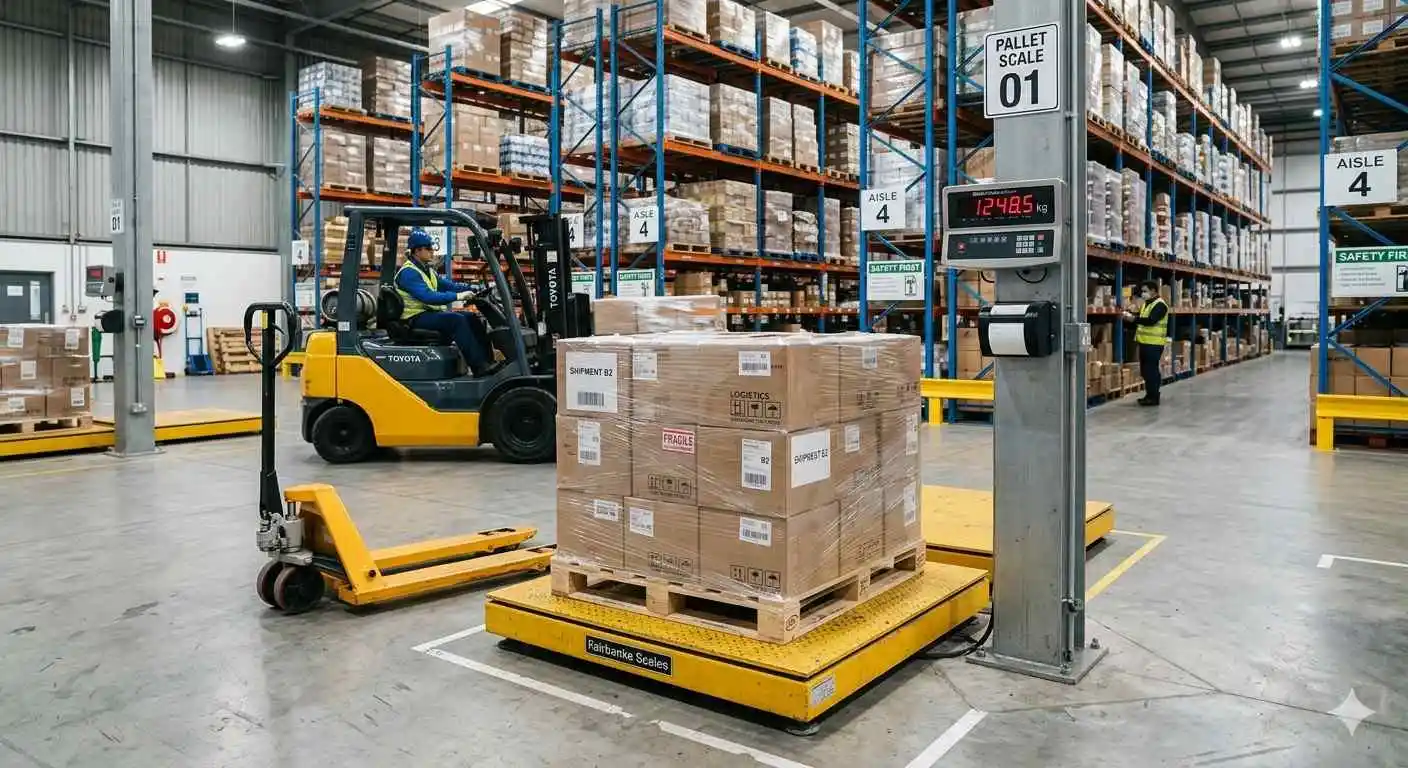
Warehouses today operate in a highly competitive environment where speed, inventory accuracy, and operational efficiency directly affect profitability. Whether managing logistics, manufacturing, distribution, retail inventory, or export operations, accurate weighing systems have become an essential part of warehouse management.
Among the most valuable weighing solutions used in modern warehouses, pallet scales stand out for their ability to simplify material handling, reduce manual work, improve inventory control, and increase productivity.
Businesses handling bulk goods, cartons, pallets, industrial products, raw materials, or shipping loads increasingly rely on pallet scales to optimize warehouse workflows. Choosing the right pallet scale can significantly improve efficiency while minimizing operational errors.
This guide explains everything about pallet scales, their types, applications, benefits, buying considerations, and how they enhance warehouse performance.
What Are Pallet Scales?
Pallet scales are industrial weighing devices specifically designed to weigh palletized goods quickly and accurately. These scales allow operators to place loaded pallets directly onto the weighing platform without unloading products.
They are widely used in:
- Warehouses
- Distribution centers
- Manufacturing plants
- Shipping facilities
- Logistics hubs
- Retail inventory centers
- Food processing industries
- Pharmaceutical storage units
Unlike traditional weighing methods, pallet scales eliminate unnecessary handling, helping businesses save time and labour costs.
Why Warehouse Efficiency Depends on Accurate Weighing
Modern warehouses process thousands of products daily. Even small weighing inaccuracies may lead to:
- Inventory mismatches
- Shipping errors
- Higher transportation costs
- Compliance issues
- Financial losses
- Customer dissatisfaction
Efficient weighing systems support:
Faster Inventory Management
Warehouse teams can instantly verify incoming and outgoing goods.
Reduced Manual Handling
Products remain on pallets during weighing, reducing labor effort.
Better Shipping Accuracy
Correct weights help avoid transport overcharges and logistical delays.
Improved Productivity
Workers spend less time moving products for separate weighing procedures.
How Pallet Scales Improve Warehouse Operations
1. Streamlined Material Movement
Traditional weighing often requires unloading products before measurement. Pallet scales eliminate this step.
Operators simply move palletized goods onto the scale using:
- Forklifts
- Hand pallet trucks
- Pallet jacks
This reduces handling time significantly.
2. Better Inventory Accuracy
Inventory errors can disrupt warehouse workflows.
Pallet scales help maintain accurate stock records by ensuring:
- Correct inbound weight verification
- Outbound shipment confirmation
- Reduced counting discrepancies
Real-time weighing supports warehouse management systems effectively.
3. Faster Dispatch Operations
Shipping departments benefit from rapid pallet weighing before dispatch.
Benefits include:
- Reduced truck waiting time
- Faster order fulfillment
- Improved delivery schedules
Efficient dispatch operations increase customer satisfaction.
4. Reduced Operational Costs
Manual processes increase labor expenses.
Pallet scales help reduce:
- Workforce requirements
- Product handling damage
- Time wastage
- Operational delays
The result is improved warehouse profitability.
Types of Pallet Scales Used in Warehouses
Selecting the right pallet scale depends on warehouse size, load capacity, and operational requirements.
U-Shaped Pallet Scales
These scales feature an open U-frame design allowing pallet jacks to move directly into position.
Advantages:
- Easy loading
- Quick movement
- Suitable for standard pallets
- Space-saving design
Best for:
- Distribution centers
- Logistics facilities
- Fast-moving inventory operations
Floor Pallet Scales
Floor pallet scales provide a platform surface installed directly on warehouse floors.
Features:
- Heavy-duty construction
- Large weighing capacity
- Durable performance
Suitable for:
- Manufacturing industries
- Industrial warehouses
- Bulk storage facilities
Portable Pallet Scales
Portable scales are ideal for warehouses requiring mobility.
Benefits:
- Lightweight design
- Flexible placement
- Easy transportation
- Space efficiency
Ideal applications include temporary storage areas and mobile operations.
Stainless Steel Pallet Scales
Industries requiring hygiene standards use stainless steel variants.
Common sectors:
- Food processing
- Pharmaceuticals
- Chemical storage
Benefits:
- Corrosion resistance
- Easy cleaning
- Long lifespan
Digital Pallet Scales
Modern warehouses increasingly prefer digital systems.
Features include:
- LCD displays
- Data storage
- Wireless connectivity
- Integration capability
These scales improve operational monitoring and reporting.
Key Features to Consider Before Buying Pallet Scales
Choosing the right pallet scale involves evaluating several factors.
Load Capacity
Capacity selection depends on warehouse products.
Common capacities:
- 500 kg
- 1000 kg
- 2000 kg
- 3000 kg
- 5000 kg
Always select a scale with higher capacity than expected loads.
Accuracy Level
Warehouse operations require precision.
Look for:
- High-resolution displays
- Minimal error margins
- Stable readings
Accuracy improves inventory management.
Platform Size
Scale dimensions should match pallet sizes.
Common pallet sizes include:
- Euro pallets
- Industrial pallets
- Custom pallets
Improper sizing affects efficiency.
Display Type
Digital indicators improve usability.
Preferred features:
- Backlit display
- Large digits
- Easy interface
- Battery backup
Durability
Warehouses involve harsh environments.
Select scales with:
- Heavy-duty steel construction
- Powder coating
- Impact resistance
- Overload protection
Connectivity Options
Modern systems support:
- USB output
- Bluetooth
- Wi-Fi
- ERP integration
- Warehouse software connectivity
Data integration improves operational control.
Industries Benefiting from Pallet Scales
Logistics Industry
Logistics companies rely heavily on pallet scales to verify shipment weights.
Benefits:
- Accurate freight billing
- Faster loading
- Reduced transportation disputes
Manufacturing Sector
Factories use pallet scales for:
- Raw material weighing
- Finished product dispatch
- Inventory verification
They improve production tracking.
Food Warehousing
Food storage facilities require precise weighing to maintain compliance.
Pallet scales support:
- Batch management
- Quality control
- Regulatory standards
Retail Distribution Centers
Retail warehouses handle large inventory volumes.
Pallet scales improve:
- Stock movement
- Shipment preparation
- Order accuracy
Pharmaceutical Storage
Pharma facilities demand precision and cleanliness.
Stainless pallet scales support compliance requirements.
Advantages of Digital Pallet Scales Over Traditional Methods
Traditional warehouse weighing methods often involve separate platforms and manual recording.
Digital pallet scales provide advantages such as:
Real-Time Data
Instant measurements reduce delays.
Better Reporting
Digital systems store weighing records automatically.
Reduced Errors
Manual calculations decrease significantly.
Improved Traceability
Businesses maintain accurate shipment histories.
Faster Operations
Warehouse throughput increases.
Warehouse Automation and Pallet Scales
Automation is transforming warehouse operations globally.
Pallet scales integrate with:
- Warehouse Management Systems (WMS)
- ERP software
- Barcode systems
- Inventory tracking tools
- Logistics software
Integration allows:
- Automated stock updates
- Real-time reporting
- Improved analytics
- Faster decision making
Warehouse automation increases operational efficiency.
Maintenance Tips for Pallet Scales
Proper maintenance ensures long-term performance.
Clean Regularly
Remove dust and debris.
Warehouse dirt affects accuracy.
Calibrate Periodically
Calibration ensures precise readings.
Schedule regular inspections.
Avoid Overloading
Never exceed capacity limits.
Overloading damages sensors.
Inspect Components
Check:
- Load cells
- Displays
- Cables
- Frames
Early maintenance prevents failures.
Protect Against Moisture
Use waterproof models in humid environments.
This extends equipment life.
Future Trends in Warehouse Weighing Technology
Warehouse operations continue evolving.
Emerging trends include:
IoT-Enabled Scales
Connected devices enable remote monitoring.
Cloud Data Integration
Cloud platforms improve accessibility.
AI-Based Inventory Tracking
Artificial intelligence improves stock forecasting.
Wireless Monitoring
Wireless systems reduce infrastructure costs.
Smart Warehousing
Digital transformation drives efficiency improvements.
Pallet scales will remain central to these innovations.
Choosing the Right Supplier Matters
Warehouse efficiency depends not only on equipment quality but also on supplier expertise.
Businesses should consider suppliers offering:
- Industrial-grade products
- Calibration support
- Installation services
- Technical assistance
- After-sales service
- Custom solutions
Working with a Best Weighing Scale Supplier helps businesses select suitable warehouse weighing systems that align with operational requirements.
Conclusion
Warehouse efficiency depends on speed, precision, and optimized workflows. Pallet scales help businesses improve inventory accuracy, reduce manual labor, accelerate dispatch operations, and support warehouse automation.
As supply chains become more advanced, investing in reliable pallet weighing solutions becomes essential for maintaining productivity and competitiveness.
Whether operating a logistics hub, manufacturing plant, retail warehouse, or distribution center, selecting the right pallet scale can significantly improve overall warehouse performance and operational success.
By adopting modern weighing technologies, warehouses can achieve greater efficiency, better inventory control, and long-term business growth.
Frequently Asked Questions (FAQ)
What is the purpose of a pallet scale?
Pallet scales measure palletized goods quickly without unloading products, improving warehouse efficiency.
Are pallet scales suitable for heavy loads?
Yes. Industrial pallet scales support capacities ranging from hundreds to thousands of kilograms.
Can pallet scales connect to warehouse software?
Modern digital pallet scales support software integration and data transfer.
Which industries use pallet scales?
Logistics, manufacturing, food processing, retail distribution, and pharmaceutical industries widely use them.
How often should pallet scales be calibrated?
Calibration frequency depends on usage, but periodic inspections are recommended.