

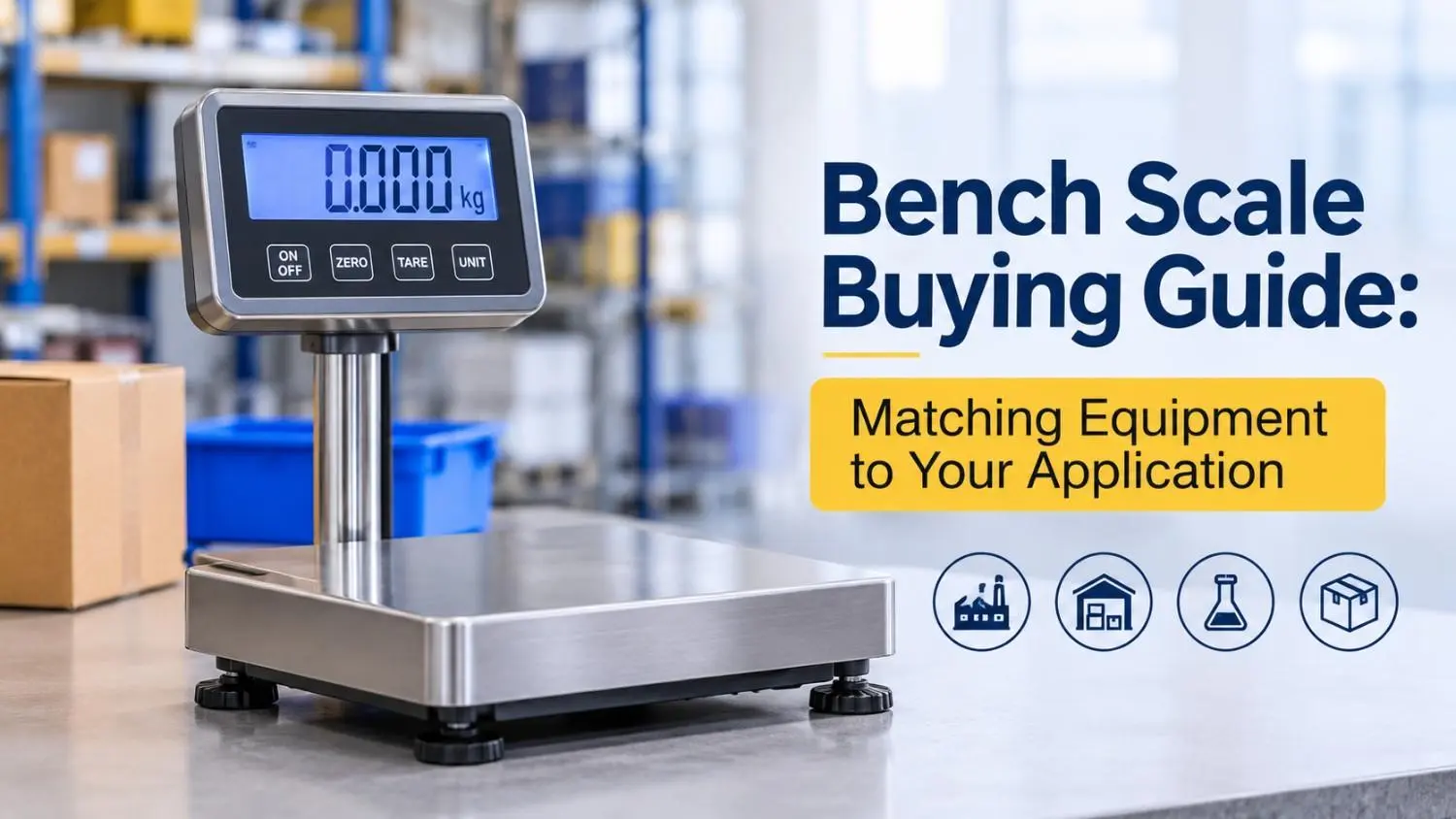
A bench scale seems like one of the simpler purchasing decisions a facility might face; it’s a relatively small, self-contained piece of equipment compared to a full weighbridge or industrial platform scale. Yet the range of applications bench scales serve, from rough parts counting on a warehouse floor to precise formulation work in a laboratory, means that “bench scale” as a category covers equipment with genuinely different design priorities depending on what it’s actually being used for. Buying the wrong type for your application is a surprisingly common and avoidable mistake.
This guide walks through the key decisions involved in matching bench scale equipment to your specific application, rather than defaulting to a generic mid-range option that technically works but doesn’t excel at the task it’s meant to perform.
Start With Your Actual Accuracy Requirements
The single most important factor in choosing a bench scale is understanding how precise your application genuinely needs to be. Parts counting for inventory purposes typically tolerates a wider accuracy margin than laboratory formulation work, where differences of a gram or less can matter significantly depending on the application. Being honest about your actual accuracy requirements, rather than defaulting to “as precise as possible” out of general caution, helps avoid overpaying for precision your application doesn’t genuinely need precision that, in some cases, can even work against you by making the scale more sensitive to environmental interference like vibration or air currents that a less sensitive scale would simply ignore. This is a common but understandable mistake, since it’s natural to assume more precision is always better, when in practice it simply needs to match the actual task.
Capacity and Platform Size for Your Typical Items
Bench scales should have sufficient capacity and platform size to comfortably handle what you’re mainly going to be weighing, with a little extra room for those larger items that come along every now and then, but not be so large that it’s sacrificing the accuracy of your daily weighing needs. Consider not just the weight of typical items but their physical dimensions, since an item that technically falls within the scale’s weight capacity but doesn’t sit stably on an undersized platform creates both accuracy and safety concerns during routine use.
Environmental Considerations Often Overlooked
Where a bench scale will actually operate matters enormously for both equipment selection and long-term reliability. A Bench Scale destined for a warehouse floor needs genuinely different durability characteristics than one intended for a climate-controlled laboratory or office environment dust resistance, tolerance for temperature swings, and physical robustness against accidental impacts all matter considerably more in an industrial setting than they would in a controlled lab space.
Facilities sometimes buy equipment rated for ideal conditions, which are then placed in an environment substantially more severe than the equipment was designed for, causing premature failure or calibration drift that is improperly blamed on the equipment quality itself. Being entirely honest about the actual operating conditions during selection avoids this totally self-inflicted issue.
Display and Indicator Features That Matter in Practice
The digital indicator paired with a bench scale significantly affects everyday usability, sometimes more than the underlying weighing mechanism itself. Response time: how quickly the display settles on a stable reading matters considerably for applications involving frequent, repeated weighing throughout a shift, where even a few seconds of delay per transaction compounds into meaningful lost time across a full working day. Readability under actual lighting conditions, ease of recalibration, and support for multiple units of measurement are all practical features worth evaluating directly rather than assuming any standard indicator will perform adequately for your specific workflow.
Connectivity: Worth Considering Even If Not Immediately Needed
Many facilities don’t realize they should plan for integration of weighing data into a larger system, and may end up purchasing scales that lack connectivity features, only to retrofit them later. While retrofitting is possible, it can often cause more disruption than just buying new balance systems that have built-in connectivity. If there’s even a possibility that you may want to integrate your facility’s weighing systems into a larger inventory or quality management system in the future, it’s often worth paying a bit more for equipment that can support that level of integration.
Calibration Requirements for Your Application
Different applications carry meaningfully different calibration discipline requirements. Laboratory and formulation work often demands frequent calibration against certified reference weights, sometimes governed by formal quality or regulatory standards specific to the industry. General warehouse or parts-counting applications can typically follow a lighter calibration schedule without meaningfully compromising practical accuracy for their specific use case. Understanding what calibration discipline your application genuinely requires, before purchase, helps set realistic expectations for the ongoing maintenance commitment involved.
Getting Expert Guidance
Given how much application-specific nuance goes into a genuinely good bench scale decision, working with a knowledgeable weighing scale supplier in saudi arabia who takes the time to understand your specific use case rather than simply recommending whatever’s in stock makes a meaningful difference in ending up with equipment that performs well for years rather than something that technically functions but never quite fits the job it was bought for.
Weighing the Value of Local Support
Equipment reliability is not only determined by its quality but also by the service provided by the supplier. If something goes wrong, you need local support that will be able to quickly respond to your request and come to your aid. A bench scale purchased from a company that does not provide local service may require more time and effort to repair or replace, even if the equipment is small and inexpensive, but at the same time essential for everyday work.
Thinking About Total Equipment Lifespan
A bench scale purchased today should ideally serve reliably for years, which means it’s worth thinking beyond immediate needs toward how your application might evolve. A facility expanding its product range, changing its quality control processes, or scaling up throughput may find that equipment adequate for today’s narrow use case becomes limiting sooner than expected. Building in modest flexibility with slightly more capacity headroom, connectivity options not yet actively used, an indicator with more configuration flexibility than strictly needed today often proves worthwhile relative to the cost and disruption of an earlier-than-necessary replacement cycle.
Common Buying Mistakes to Avoid
A handful of patterns show up repeatedly among facilities that end up dissatisfied with a bench scale purchase. Buying based purely on price without matching capacity and accuracy to actual application needs is probably the most common. Overlooking environmental mismatch between the equipment’s rated conditions and its actual deployment environment is another frequent source of premature failure. And underestimating the practical value of a well-designed indicator, focusing purchasing decisions entirely on the platform itself while treating the display as an afterthought, rounds out the most common regrets facilities report after using equipment for a while.
Conclusion
Bench scales might be smaller and less capital-intensive than industrial weighbridges or platform scales, but getting the selection right still requires genuine attention to your specific application, environment, and workflow. Facilities that take this seriously rather than treating bench scale purchases as a minor, low-stakes decision consistently end up with equipment that supports rather than hinders daily operations across years of routine use.