

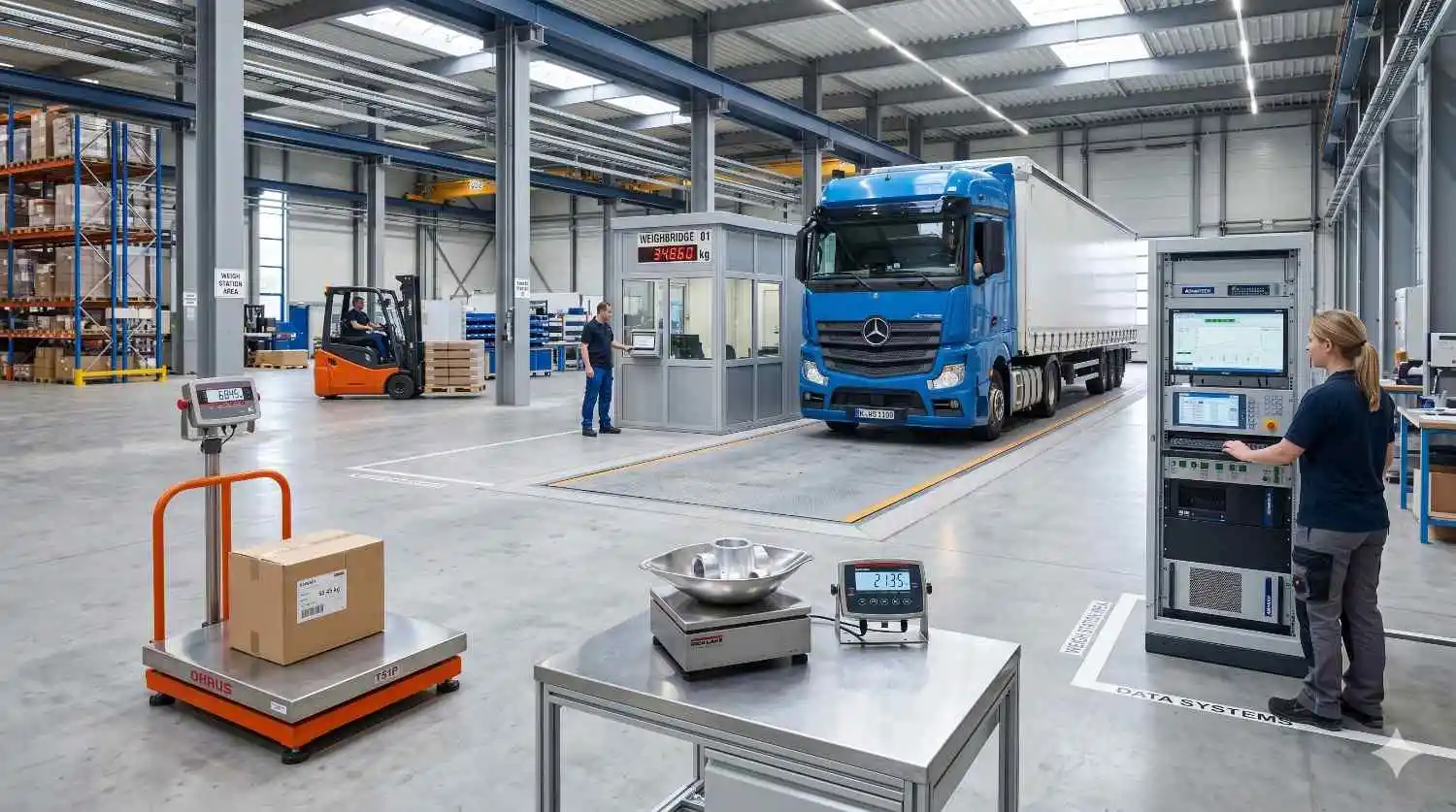
Industrial weighing plays a major role in manufacturing, logistics, healthcare, food processing, retail, construction, and many other sectors. Accurate measurement is essential for quality control, safety, inventory management, and operational efficiency. From small laboratory balances to heavy-duty truck scales, industries rely on different weighing systems to maintain precision and compliance.
In this complete guide, we will explore the major types of weighing scales used in industries, their applications, advantages, and how to choose the right one for your business.
What Are Industrial Weighing Scales?
Industrial weighing scales are precision instruments designed to measure the weight of materials, products, vehicles, or equipment in industrial environments. Unlike regular household scales, industrial scales are built for durability, accuracy, and high-capacity operations.
They are widely used in:
- Manufacturing industries
- Warehouses and logistics
- Pharmaceutical companies
- Food processing units
- Agriculture and farming
- Construction sites
- Laboratories
- Shipping and transportation
Modern industrial weighing systems often include digital displays, automation features, software integration, and data management systems for better operational efficiency.
Why Industrial Weighing Accuracy Matters
Accurate weighing is critical for businesses because even small measurement errors can lead to:
- Product quality issues
- Financial losses
- Inventory mismatches
- Regulatory penalties
- Customer dissatisfaction
- Production inefficiencies
Industries use specialized weighing equipment to ensure:
- Compliance with standards
- Consistent product quality
- Efficient material handling
- Safe transportation
- Reduced wastage
Choosing the correct scale can significantly improve productivity and operational performance.
Main Types of Weighing Scales Used in Industries
Below are the most commonly used industrial weighing scales.
1. Platform Weighing Scales
Platform scales are one of the most widely used industrial weighing systems. These scales feature a large flat platform where goods are placed for weighing.
Applications
- Warehouses
- Manufacturing plants
- Packaging industries
- Shipping centers
Features
- Heavy-duty design
- High weight capacity
- Digital or analog display
- Stainless steel options
- Portable and fixed models
Advantages
- Easy to use
- Durable construction
- Suitable for bulky materials
- Accurate measurements
Platform scales are ideal for industries that handle large cartons, sacks, containers, and raw materials.
2. Bench Scales
Bench scales are compact weighing devices designed for smaller industrial operations. They are usually placed on worktables or benches.
Applications
- Food industries
- Laboratories
- Retail packaging
- Pharmaceutical industries
Features
- Compact design
- High precision
- Digital readouts
- Battery or electric operation
Advantages
- Space-saving
- Easy portability
- Quick measurements
- Ideal for light to medium loads
Bench scales are commonly used when precision and convenience are equally important.
3. Crane Scales
Crane scales are suspended weighing devices used to measure heavy loads lifted by cranes or hoists.
Applications
- Steel industries
- Shipping yards
- Construction sites
- Heavy manufacturing
Features
- Hook-based weighing system
- Wireless display options
- Heavy load capacity
- Rugged construction
Advantages
- Efficient for overhead weighing
- Reduces manual handling
- Suitable for large materials
- Improves workplace safety
Crane scales are highly useful in industries handling oversized or difficult-to-move materials.
4. Truck Scales
Truck scales, also called weighbridges, are large scales designed to weigh entire vehicles.
Applications
- Logistics companies
- Mining industries
- Agriculture
- Waste management
Features
- Extremely high capacity
- Digital weight systems
- Long platform structure
- Weather-resistant design
Advantages
- Accurate vehicle weighing
- Prevents overloading
- Improves transportation compliance
- Efficient inventory tracking
Truck scales are essential for businesses involved in bulk transportation and freight operations.
5. Counting Scales
Counting scales are designed to count items based on weight instead of manual counting.
Applications
- Hardware industries
- Electronic component manufacturing
- Packaging industries
- Inventory management
Features
- Fast counting system
- Digital interface
- Precision sensors
- Memory storage
Advantages
- Saves time
- Reduces counting errors
- Improves inventory accuracy
- Enhances productivity
Counting scales are especially beneficial for businesses handling large quantities of small parts.
6. Precision Balances
Precision balances are highly accurate scales used for scientific and laboratory applications.
Applications
- Laboratories
- Pharmaceutical industries
- Chemical industries
- Research centers
Features
- Ultra-high accuracy
- Sensitive measurement sensors
- Digital calibration
- Compact design
Advantages
- Extremely precise results
- Ideal for sensitive materials
- Reliable measurements
- Advanced calibration systems
Precision balances are critical when even the smallest measurement variations matter.
7. Analytical Balances
Analytical balances provide extremely accurate measurements for laboratory testing and chemical analysis.
Applications
- Scientific research
- Pharmaceutical labs
- Educational institutions
- Quality testing labs
Features
- Draft shield enclosure
- High sensitivity
- Digital display
- Automatic calibration
Advantages
- Exceptional precision
- Reduces environmental interference
- Suitable for micro-measurements
- Reliable laboratory performance
These balances are essential for chemical formulations and scientific analysis.
8. Floor Scales
Floor scales are large industrial weighing platforms installed directly on floors.
Applications
- Warehouses
- Shipping industries
- Manufacturing plants
- Distribution centers
Features
- Low-profile design
- Heavy-duty construction
- Large weighing surface
- Digital displays
Advantages
- Easy loading and unloading
- Durable for industrial use
- Suitable for pallet weighing
- High weight capacity
Floor scales are ideal for weighing pallets, containers, and industrial goods.
9. Pallet Truck Scales
Pallet truck scales combine pallet handling and weighing into one device.
Applications
- Logistics
- Warehouses
- Retail distribution
- Manufacturing
Features
- Built-in weighing system
- Portable operation
- Rechargeable batteries
- Digital displays
Advantages
- Saves operational time
- Improves workflow
- Eliminates separate weighing steps
- Easy material handling
These scales increase efficiency in fast-moving warehouse environments.
10. Checkweighers
Checkweighers are automated systems that verify whether product weights fall within specified limits.
Applications
- Food processing
- Pharmaceutical packaging
- Beverage industries
- Automated production lines
Features
- Conveyor integration
- High-speed operation
- Automatic rejection systems
- Real-time monitoring
Advantages
- Ensures product consistency
- Improves quality control
- Reduces human error
- Supports compliance standards
Checkweighers are widely used in automated production facilities.
11. Moisture Balances
Moisture balances measure both weight and moisture content in products.
Applications
- Agriculture
- Food industries
- Chemical industries
- Laboratories
Features
- Heating system
- Moisture analysis
- Digital interface
- High precision
Advantages
- Fast moisture detection
- Improves product quality
- Accurate testing
- Time-saving operation
These balances are important for industries where moisture content affects product quality.
12. Retail Weighing Scales
Retail scales are commonly used in commercial and industrial retail environments.
Applications
- Supermarkets
- Grocery stores
- Meat shops
- Bakeries
Features
- Price calculation
- Barcode integration
- Digital displays
- Compact design
Advantages
- Fast customer service
- Accurate billing
- Easy product management
- User-friendly operation
Retail weighing scales help improve transaction efficiency.
Analog vs Digital Industrial Weighing Scales
Industrial weighing systems are available in both analog and digital versions.
| Feature | Analog Scales | Digital Scales |
| Accuracy | Moderate | High |
| Maintenance | Higher | Lower |
| Readability | Manual | Easy digital display |
| Automation | Limited | Advanced |
| Data Storage | No | Yes |
| Speed | Slower | Faster |
Today, most industries prefer digital weighing systems due to their advanced capabilities and better accuracy.
How to Choose the Right Industrial Weighing Scale
Selecting the right weighing scale depends on several factors.
1. Weight Capacity
Choose a scale capable of handling your maximum load requirements.
2. Accuracy Requirements
Industries like pharmaceuticals require ultra-high precision, while logistics may prioritize capacity.
3. Environmental Conditions
Consider:
- Dust
- Moisture
- Temperature
- Chemicals
- Outdoor exposure
4. Scale Size
The platform size should suit your products and operational space.
5. Connectivity Features
Modern scales offer:
- Bluetooth
- USB integration
- ERP connectivity
- Cloud data systems
6. Compliance Standards
Ensure the scale complies with industrial and legal regulations.
Benefits of Using Industrial Weighing Scales
Industrial weighing systems offer numerous operational advantages.
Improved Accuracy
Precise measurements reduce errors and improve product quality.
Increased Productivity
Automated systems speed up industrial processes.
Better Inventory Management
Accurate stock measurements improve inventory control.
Regulatory Compliance
Proper weighing systems help meet legal and industry standards.
Reduced Material Waste
Correct measurements minimize product wastage and improve profitability.
Latest Trends in Industrial Weighing Technology
Modern industrial weighing systems continue to evolve with advanced technology.
Smart Weighing Systems
Connected devices allow real-time monitoring and remote management.
IoT Integration
Industrial scales now integrate with cloud-based systems for automated reporting.
AI-Powered Analytics
Artificial intelligence helps identify operational inefficiencies and maintenance needs.
Wireless Connectivity
Bluetooth and Wi-Fi enabled scales improve operational flexibility.
Automated Production Integration
Many industries integrate weighing systems directly into automated production lines.
Maintenance Tips for Industrial Weighing Scales
Proper maintenance ensures long-term performance and accuracy.
Regular Calibration
Calibration maintains measurement precision.
Cleaning
Keep scales free from dust, chemicals, and debris.
Avoid Overloading
Never exceed the maximum capacity.
Inspect Components
Regularly check sensors, cables, and displays.
Schedule Professional Servicing
Periodic servicing extends equipment lifespan.
Industries That Depend on Industrial Weighing Systems
Many industries rely heavily on accurate weighing systems.
Manufacturing
For raw materials and finished goods measurement.
Food Processing
For portion control and packaging consistency.
Pharmaceuticals
For precise formulation measurements.
Agriculture
For grain, fertilizer, and livestock weighing.
Logistics and Shipping
For freight management and compliance.
Construction
For material measurement and transportation.
Importance of Choosing Reliable Equipment Providers
The quality of industrial weighing systems directly impacts operational efficiency and long-term reliability. Businesses should always purchase weighing equipment from trusted manufacturers and experienced Weighing Scale Suppliers to ensure accurate performance, durability, technical support, and proper calibration services.
Future of Industrial Weighing Scales
The future of industrial weighing technology is focused on:
- Automation
- AI integration
- Smart analytics
- Remote monitoring
- Enhanced precision
- Energy efficiency
As industries become more data-driven, weighing systems will continue evolving into intelligent operational tools rather than simple measurement devices.
Conclusion
Industrial weighing scales are essential tools across countless industries. From platform scales and truck weighbridges to laboratory balances and automated checkweighers, each type serves a specific operational purpose.
Choosing the right weighing scale improves:
- Accuracy
- Productivity
- Compliance
- Cost efficiency
- Product quality
Modern digital weighing systems also offer advanced features such as automation, connectivity, and smart data analysis, making them critical for modern industrial operations.
Businesses should carefully evaluate their weighing requirements, industry standards, and operational needs before selecting a weighing system. Investing in high-quality industrial weighing equipment ensures long-term reliability, better workflow management, and improved business performance.