

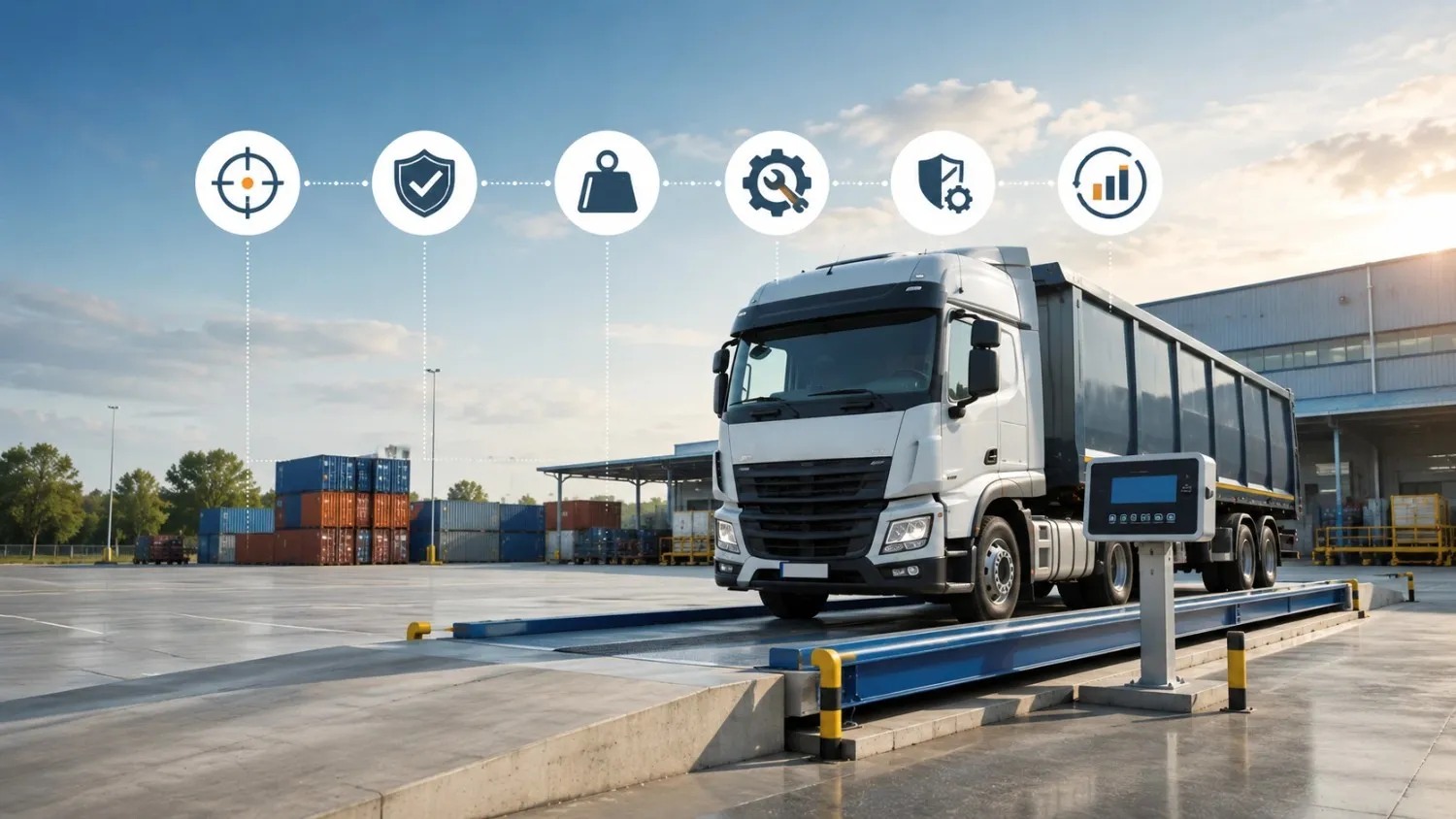
Choosing the right truck scale is one of the most important investment decisions for businesses involved in transportation, logistics, construction, mining, agriculture, waste management, manufacturing, and industrial operations. While many companies focus on the initial purchase price, selecting the ideal truck scale requires a much deeper evaluation of operational requirements, long-term reliability, maintenance costs, weighing accuracy, and future business growth.
Truck scales are far more than simple weighing platforms. They serve as critical tools for inventory management, compliance, billing accuracy, transportation planning, and operational efficiency. A well-designed weighing system can help businesses reduce losses, improve productivity, prevent overloading, and generate valuable operational data.
As industries become increasingly data-driven and automated, modern weighing systems are evolving into integrated business management tools. Organizations that choose the right solution gain significant advantages in efficiency, transparency, and profitability.
This comprehensive guide explains everything you need to know before investing in a truck scale, including system types, technology options, installation requirements, cost considerations, maintenance needs, and expert recommendations.
Why Truck Scales Are Essential for Modern Businesses
Every day, thousands of commercial vehicles transport materials, products, and goods across industrial facilities, warehouses, ports, mines, and construction sites.
Without accurate weight measurement, businesses may encounter:
- Inventory inaccuracies
- Revenue leakage
- Regulatory violations
- Transportation inefficiencies
- Customer disputes
- Operational delays
Truck scales provide accurate weight data that supports critical business decisions.
Industries use weighing systems for:
- Material tracking
- Production monitoring
- Fleet management
- Freight billing
- Compliance verification
- Inventory control
The accuracy of these processes directly impacts profitability.
Understanding How Truck Scales Work
A truck scale is a large industrial weighing platform designed to measure the weight of vehicles and their loads.
The process typically involves:
- Vehicle enters the scale.
- Load cells detect the weight.
- The system processes data electronically.
- Gross, tare, and net weights are calculated.
- Weight records are stored digitally.
Modern systems can automatically transmit data to management software, reducing manual paperwork and improving efficiency.
What Information Does a Truck Scale Measure?
Gross Weight
The total weight of the vehicle and its cargo.
Tare Weight
The weight of the empty vehicle.
Net Weight
The actual weight of transported goods.
These measurements form the foundation of inventory management and billing operations.
Industries That Rely on Truck Scales
Numerous industries depend on accurate vehicle weighing.
Construction
Construction companies transport:
- Sand
- Gravel
- Cement
- Steel
- Asphalt
Weight verification ensures accurate billing and inventory control.
Mining
Mining operations rely on accurate weight data to monitor production and shipment volumes.
Agriculture
Farmers use weighing systems to track harvests, livestock feed, fertilizers, and agricultural products.
Waste Management
Waste disposal facilities calculate fees based on incoming material weight.
Logistics
Freight companies require accurate shipment weights to optimize transportation operations.
Manufacturing
Manufacturers use scales to track raw materials and finished products.
Step 1: Analyze Your Business Requirements
Before comparing products, identify your operational needs.
Ask the following questions:
How Many Trucks Will Be Weighed Daily?
Traffic volume significantly affects system requirements.
What Types of Vehicles Use the Scale?
Vehicle size influences platform length and capacity.
What Materials Are Being Transported?
Different industries have unique weighing demands.
What Level of Accuracy Is Required?
High-value materials require greater precision.
Will the Scale Operate Continuously?
Heavy usage may require more robust equipment.
A detailed needs assessment helps prevent costly purchasing mistakes.
Step 2: Determine Capacity Requirements
Capacity is one of the most important selection criteria.
Most truck scales are available in capacities ranging from:
- 40 tons
- 60 tons
- 80 tons
- 100 tons
- 120 tons
- 150 tons
Businesses should choose a capacity that accommodates:
- Current operations
- Future expansion
- Unexpected load increases
Selecting insufficient capacity can lead to equipment damage and reduced lifespan.
Step 3: Select the Appropriate Scale Length
Scale length determines whether a vehicle can be weighed accurately.
Common options include:
12-Meter Scales
Suitable for smaller commercial vehicles.
18-Meter Scales
Common for medium-sized fleets.
24-Meter Scales
One of the most widely used configurations.
30-Meter Scales
Designed for oversized vehicles and industrial operations.
The correct length depends on vehicle dimensions and operational requirements.
Step 4: Understand Different Truck Scale Designs
Choosing the right design is essential for long-term success.
Pit-Type Truck Scale
A pit-type scale is installed flush with ground level.
Advantages
- Space efficient
- Easy vehicle access
- Clean appearance
Disadvantages
- Higher installation costs
- Drainage requirements
- More complex maintenance
These systems are commonly installed where available space is limited.
Pitless Truck Scale
Pitless designs sit above ground and require access ramps.
Advantages
- Lower construction costs
- Easier maintenance
- Better visibility
Disadvantages
- Larger footprint
- Ramp requirements
Many industrial facilities prefer pitless installations because of their flexibility.
Portable Truck Scale
Portable systems provide mobility and flexibility.
Advantages
- Fast deployment
- Relocation capability
- Lower upfront costs
Disadvantages
- Limited capacity options
- Less suitable for permanent facilities
Portable scales are ideal for temporary projects and remote sites.
Steel Deck vs Concrete Deck Truck Scales
One of the most overlooked decisions involves deck construction.
Steel Deck Systems
Steel deck scales use fabricated steel structures.
Benefits
- Faster installation
- Lower weight
- Easier transportation
Drawbacks
- May require more maintenance
- Temperature sensitivity
Concrete Deck Systems
Concrete decks use reinforced concrete structures.
Benefits
- Excellent durability
- Longer lifespan
- Stable performance
Drawbacks
- Longer installation time
- Higher transportation costs
Many high-volume industrial operations prefer concrete designs due to their durability.
Understanding Load Cell Technology
Load cells are the heart of every truck scale.
They convert weight into measurable electronic signals.
The quality of load cells directly affects accuracy and reliability.
Analog Load Cells
Analog load cells have been used for decades.
Advantages
- Proven technology
- Lower initial investment
- Widely available
Disadvantages
- Susceptible to interference
- Limited diagnostic capabilities
Digital Load Cells
Modern systems increasingly use digital technology.
Advantages
- Higher accuracy
- Better diagnostics
- Enhanced reliability
- Faster troubleshooting
Digital systems often reduce long-term maintenance costs.
Environmental Factors to Consider
Environmental conditions significantly impact truck scale performance.
Factors include:
Extreme Heat
High temperatures can affect electronic components.
Dust and Sand
Industrial environments generate large amounts of airborne particles.
Moisture
Rainfall and humidity require protective measures.
Corrosion
Coastal regions require corrosion-resistant materials.
Choosing equipment designed for local conditions improves reliability and lifespan.
The Importance of Accuracy
Accuracy directly impacts profitability.
Even small measurement errors can accumulate into substantial financial losses over time.
Benefits of accurate weighing include:
- Fair customer billing
- Better inventory control
- Improved compliance
- Reduced disputes
- Enhanced operational efficiency
Businesses handling high-value materials should prioritize precision.
Step 5: Evaluate Automation Features
Modern weighing operations are increasingly automated. Businesses that process dozens or hundreds of vehicles daily can significantly improve efficiency through automation.
Automation eliminates manual processes, reduces errors, and speeds up vehicle throughput.
RFID Vehicle Identification
Radio Frequency Identification (RFID) technology automatically identifies vehicles as they approach the scale.
Benefits include:
- Faster processing
- Reduced human intervention
- Improved security
- Accurate vehicle tracking
RFID systems are commonly used in logistics hubs, manufacturing plants, and mining operations.
License Plate Recognition
Advanced weighing systems can automatically capture and record vehicle registration details.
Advantages include:
- Reduced paperwork
- Faster vehicle entry
- Improved record keeping
- Enhanced security
This technology is particularly useful for facilities with high traffic volumes.
Automated Ticket Generation
Manual ticket preparation consumes time and increases the risk of errors.
Automated systems can instantly generate:
- Weight tickets
- Delivery records
- Compliance reports
- Customer invoices
This improves operational efficiency and customer service.
Traffic Control Systems
Integrated traffic lights and barrier systems help manage vehicle movement around the scale.
Benefits include:
- Improved safety
- Reduced congestion
- Faster operations
- Better traffic flow management
These systems are commonly used in industrial facilities with continuous truck movement.
Step 6: Consider Software Integration Capabilities
Modern truck scales are no longer standalone devices.
Today’s businesses require weighing systems that integrate seamlessly with management software.
Enterprise Resource Planning (ERP) Integration
ERP integration allows weight data to automatically update business systems.
Benefits include:
- Real-time inventory updates
- Accurate reporting
- Improved workflow automation
- Better decision-making
Inventory Management Systems
Weight measurements can automatically update stock records.
This helps businesses:
- Reduce inventory discrepancies
- Improve forecasting
- Monitor material usage
- Minimize losses
Fleet Management Software
Transportation companies benefit from integrating weight data with fleet management platforms.
Advantages include:
- Route optimization
- Fuel efficiency monitoring
- Vehicle utilization tracking
- Compliance management
Cloud-Based Data Management
Cloud solutions provide access to weighing data from any location.
Benefits include:
- Remote monitoring
- Data security
- Real-time reporting
- Multi-site management
As businesses expand, cloud integration becomes increasingly valuable.
Step 7: Understand Installation Requirements
Proper installation is critical for accurate and reliable performance.
Even the best truck scale can underperform if installed incorrectly.
Site Selection
The location should provide:
- Adequate vehicle access
- Stable ground conditions
- Proper drainage
- Future expansion possibilities
Careful planning helps avoid operational challenges later.
Foundation Design
A strong foundation is essential for accuracy and longevity.
Poor foundations can cause:
- Measurement errors
- Structural stress
- Increased maintenance costs
- Premature equipment failure
Professional engineering assessment is recommended before installation.
Traffic Flow Planning
Efficient traffic flow improves productivity.
Businesses should consider:
- Entry and exit routes
- Vehicle waiting areas
- Safety requirements
- Peak traffic periods
Good traffic management minimizes delays.
Utility Requirements
Modern systems may require:
- Electrical connections
- Internet connectivity
- Communication networks
- Security systems
Planning utilities in advance reduces installation complications.
Understanding Truck Scale Costs
One of the most common questions businesses ask is:
“How much does a truck scale cost?”
The answer depends on multiple factors.
Scale Size
Larger scales generally cost more due to:
- Increased materials
- Higher capacity
- Additional structural requirements
Capacity Requirements
Higher-capacity systems require stronger components and more robust construction.
Technology Features
Advanced features increase initial investment.
Examples include:
- RFID systems
- Automated barriers
- Cloud software
- Digital load cells
- License plate recognition
Installation Expenses
Costs may include:
- Excavation
- Foundation work
- Electrical infrastructure
- Networking equipment
Installation costs vary depending on site conditions.
Maintenance Costs
Businesses should consider long-term expenses rather than focusing only on purchase price.
Factors include:
- Calibration
- Repairs
- Software updates
- Replacement parts
A lower purchase price does not always result in lower ownership costs.
Why Maintenance Matters
Truck scales operate in demanding environments and require regular maintenance.
Preventive maintenance improves:
- Accuracy
- Reliability
- Equipment lifespan
- Operational efficiency
Ignoring maintenance often results in expensive repairs and downtime.
Recommended Maintenance Practices
Daily Cleaning
Debris accumulation can affect weighing accuracy.
Regular cleaning helps maintain performance.
Visual Inspections
Operators should inspect:
- Load cells
- Cabling
- Deck structure
- Indicator displays
Early detection prevents larger issues.
Load Cell Inspection
Load cells should be checked periodically for:
- Physical damage
- Corrosion
- Water intrusion
- Signal irregularities
These components are critical to scale accuracy.
Calibration Verification
Regular calibration ensures measurements remain accurate.
Businesses should establish a scheduled calibration program.
Importance of Calibration
Calibration verifies that the scale provides accurate measurements.
Benefits include:
- Regulatory compliance
- Customer confidence
- Operational accuracy
- Reduced disputes
Industries that rely on precise measurements should prioritize regular calibration.
How Often Should Calibration Be Performed?
The frequency depends on:
- Traffic volume
- Environmental conditions
- Regulatory requirements
- Material value
High-volume operations may require more frequent verification.
Calculating Return on Investment (ROI)
Truck scales should be viewed as long-term business investments.
ROI comes from multiple areas.
Reduced Revenue Leakage
Accurate measurements prevent losses caused by weighing errors.
Improved Inventory Accuracy
Reliable weight data improves stock management.
Faster Vehicle Processing
Automation reduces waiting times and increases throughput.
Lower Labor Costs
Automated systems reduce manual workload.
Better Compliance
Avoiding fines and penalties contributes to financial savings.
Over time, these benefits often exceed the initial investment.
Common Mistakes Businesses Make
Many organizations encounter problems because they overlook important considerations during the buying process.
Focusing Solely on Price
The cheapest option may have:
- Higher maintenance costs
- Lower durability
- Reduced accuracy
Total ownership cost is more important than purchase price alone.
Ignoring Future Growth
Businesses often underestimate future requirements.
A scale that meets today’s needs may become inadequate within a few years.
Selecting Insufficient Capacity
Choosing too small a capacity can:
- Damage equipment
- Reduce lifespan
- Create operational bottlenecks
Overlooking Software Requirements
Lack of integration can limit operational efficiency and future scalability.
Neglecting Environmental Conditions
Environmental challenges should influence equipment selection.
Choosing unsuitable equipment can increase maintenance requirements.
Future Trends in Truck Scale Technology
Technology continues transforming industrial weighing systems.
Businesses should understand emerging trends before making purchasing decisions.
Artificial Intelligence
AI-powered systems can:
- Detect anomalies
- Predict maintenance needs
- Improve operational efficiency
- Reduce downtime
Internet of Things (IoT)
Connected sensors provide real-time monitoring and diagnostics.
Benefits include:
- Predictive maintenance
- Remote troubleshooting
- Improved data collection
Smart Analytics
Modern systems generate valuable operational insights.
Analytics help businesses:
- Optimize logistics
- Improve productivity
- Identify inefficiencies
- Reduce operational costs
Remote Scale Management
Managers can monitor weighing operations from any location using mobile devices and cloud platforms.
Sustainability Initiatives
Future weighing systems will increasingly support:
- Reduced energy consumption
- Paperless operations
- Improved resource management
These capabilities align with modern sustainability goals.
Conclusion
Choosing the best truck scale for your business is a strategic decision that directly affects operational efficiency, compliance, profitability, and long-term growth. Businesses should evaluate their unique requirements carefully, including traffic volume, vehicle size, weighing accuracy, environmental conditions, software integration needs, and future expansion plans.
A high-quality weighing system delivers far more than accurate measurements. It improves inventory control, enhances logistics operations, reduces revenue leakage, supports regulatory compliance, and provides valuable business intelligence. Modern technologies such as automation, cloud connectivity, artificial intelligence, and advanced analytics are transforming weighing systems into powerful operational tools.
By focusing on total ownership value rather than simply purchase price, organizations can make informed investment decisions that support sustainable growth and operational excellence. The right truck scale will serve as a dependable asset for years, helping businesses maintain accuracy, improve efficiency, and stay competitive in an increasingly data-driven industrial environment.