

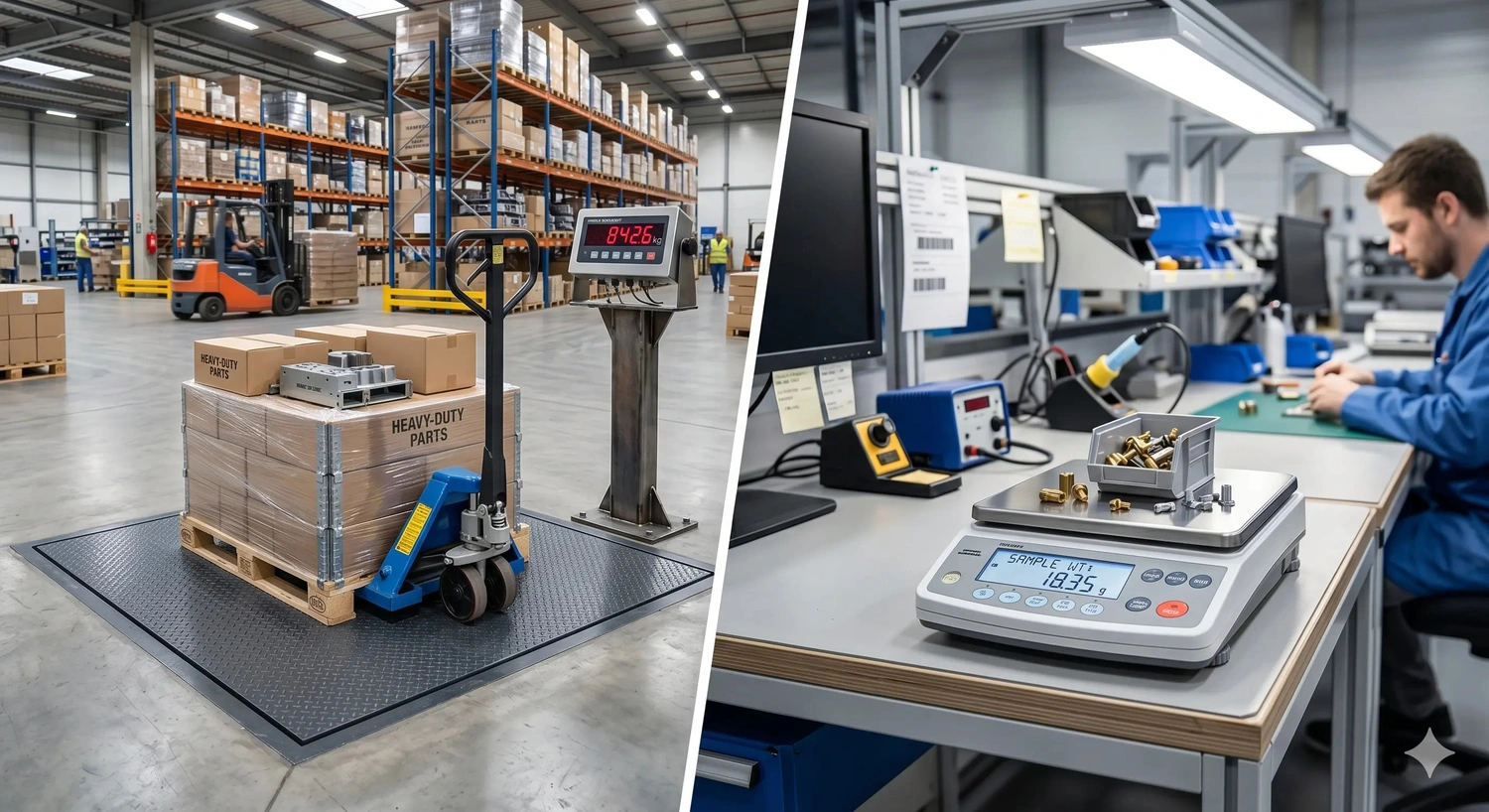
Industrial weighing equipment plays a critical role in manufacturing, logistics, retail, warehousing, pharmaceuticals, and food processing industries. Among the most commonly used weighing systems are platform scales and bench scales. While both are designed to measure weight accurately, they differ significantly in size, capacity, applications, portability, and operational efficiency.
Choosing the right weighing equipment can directly impact productivity, accuracy, workflow management, and operational costs. Businesses often struggle to decide between platform scales and bench scales because both offer unique advantages depending on the industrial requirement.
In this complete guide, we will compare platform scales vs bench scales, explain their key differences, explore their applications, and help businesses choose the ideal weighing solution.
What Is a Platform Scale?
A platform scale is a heavy-duty weighing device designed with a large flat platform that can handle bulky, oversized, or heavy materials. These scales are widely used in industrial environments where high-capacity weighing is required.
Platform scales are commonly available in different sizes and weight capacities to suit warehouses, shipping facilities, factories, and logistics operations.
Main Features of Platform Scales
- Large weighing platform
- High weight capacity
- Durable industrial construction
- Digital or analog displays
- Floor-mounted or portable options
- Stainless steel or mild steel construction
- Heavy-duty load cells
These scales are specifically designed for industrial operations involving pallets, containers, sacks, drums, and large packages.
What Is a Bench Scale?
A bench scale is a compact weighing device typically placed on tables, workbenches, or counters. Bench scales are designed for smaller loads and applications requiring precision and convenience.
They are commonly used in laboratories, retail shops, food processing units, packaging stations, and pharmaceutical industries.
Main Features of Bench Scales
- Compact and lightweight design
- Medium or low-capacity weighing
- High precision measurement
- Portable structure
- Digital display systems
- Battery or electric operation
Bench scales are ideal for operations where detailed and accurate measurements are more important than high-capacity weighing.
Platform Scale vs Bench Scale: Overview
Before diving deeper into the differences, let’s quickly compare both weighing systems.
| Feature | Platform Scale | Bench Scale |
| Size | Large | Compact |
| Weight Capacity | High | Medium/Low |
| Portability | Moderate | High |
| Accuracy | High | Very High |
| Usage | Heavy industrial loads | Small to medium items |
| Installation | Floor mounted | Tabletop |
| Best For | Warehouses & logistics | Retail & precision work |
Both scales serve important industrial purposes, but selecting the correct one depends on operational requirements.
Key Differences Between Platform Scale and Bench Scale
1. Size and Design
The most noticeable difference between platform scales and bench scales is their physical size.
Platform Scales
Platform scales are larger and designed to sit directly on the floor. They feature wide platforms capable of accommodating large industrial goods.
Common Uses
- Pallet weighing
- Drum weighing
- Bulk materials
- Heavy containers
Bench Scales
Bench scales are smaller and compact enough to fit on worktables or counters.
Common Uses
- Packaging
- Laboratory measurements
- Food portioning
- Small parts counting
Businesses with limited workspace often prefer bench scales due to their compact structure.
2. Weight Capacity
Weight capacity is one of the most important factors when choosing between these two scales.
Platform Scale Capacity
Platform scales are designed for heavy-duty industrial operations and can weigh:
- 100 kg
- 500 kg
- 1000 kg
- Several tons
They are ideal for industrial and warehouse applications.
Bench Scale Capacity
Bench scales usually support lower capacities such as:
- 1 kg
- 5 kg
- 30 kg
- 100 kg
These scales are suitable for lighter industrial and commercial operations.
3. Accuracy and Precision
Accuracy requirements vary depending on the industry.
Bench Scale Precision
Bench scales generally provide higher precision because they are used for smaller loads.
They are ideal for:
- Pharmaceuticals
- Food measurement
- Jewelry
- Chemical testing
Platform Scale Precision
Platform scales are highly accurate for large loads but may not provide the micro-level precision required in laboratory environments.
However, they are extremely reliable for industrial bulk weighing.
4. Industrial Applications
Both weighing systems are used in different industrial sectors.
Industries Using Platform Scales
Warehousing
For weighing pallets and shipments.
Manufacturing
For raw material measurement.
Logistics
For cargo and freight weighing.
Agriculture
For grain and fertilizer weighing.
Construction
For heavy material measurement.
Industries Using Bench Scales
Food Processing
For portion control and packaging.
Laboratories
For precise testing.
Retail Shops
For billing and product weighing.
Pharmaceuticals
For formula preparation.
Electronics
For small component measurement.
5. Portability
Bench Scales
Bench scales are generally lightweight and easy to move around.
This makes them ideal for:
- Mobile operations
- Flexible workstations
- Temporary setups
Platform Scales
Platform scales are heavier and often fixed in place due to their industrial design.
Some portable platform models are available, but they are less mobile than bench scales.
6. Durability and Construction
Industrial environments demand durable weighing equipment.
Platform Scale Construction
Platform scales are built with:
- Heavy-duty steel
- Reinforced load cells
- Industrial-grade materials
- Shock-resistant platforms
These scales can withstand rough handling and harsh environments.
Bench Scale Construction
Bench scales are durable but designed for lighter operations.
Many models include:
- Stainless steel surfaces
- Waterproof designs
- Compact electronic systems
7. Cost Comparison
The price difference between platform and bench scales largely depends on capacity, technology, and features.
Platform Scales
Usually more expensive due to:
- Higher weight capacity
- Larger construction
- Industrial-grade materials
Bench Scales
Generally more affordable because they are smaller and designed for lighter operations.
However, advanced precision bench scales may also be costly.
Advantages of Platform Scales
Platform scales offer several operational benefits for industries handling large loads.
High Weight Capacity
Suitable for bulky and heavy materials.
Durable Construction
Designed for harsh industrial environments.
Easy Material Handling
Perfect for pallet trucks and forklifts.
Efficient Bulk Weighing
Speeds up warehouse and shipping operations.
Reliable Industrial Performance
Ensures accurate large-scale measurements.
Advantages of Bench Scales
Bench scales provide numerous advantages for precision-based industries.
Compact Size
Fits easily into small workspaces.
High Accuracy
Excellent for detailed measurements.
Easy Portability
Convenient for flexible operations.
User-Friendly Operation
Simple controls and digital displays.
Energy Efficient
Consumes less power compared to larger systems.
How to Choose Between Platform Scale and Bench Scale
Selecting the right scale depends on several business factors.
Consider Your Load Size
If your business handles heavy pallets or industrial goods, a platform scale is the better option.
If you measure smaller products or ingredients, choose a bench scale.
Evaluate Accuracy Requirements
For highly sensitive measurements, bench scales are more suitable.
For industrial bulk weighing, platform scales provide excellent performance.
Analyze Workspace Availability
Small workstations benefit from compact bench scales.
Large warehouses and industrial plants can accommodate platform scales.
Consider Mobility Needs
Portable operations may require bench scales due to their lightweight structure.
Fixed industrial stations often use platform scales.
Assess Environmental Conditions
Harsh industrial environments require heavy-duty platform scales.
Clean indoor environments can efficiently use bench scales.
Digital Features in Modern Weighing Scales
Modern industrial scales now include advanced digital features.
Digital Displays
Easy-to-read weight measurements.
Wireless Connectivity
Bluetooth and Wi-Fi integration.
Data Storage
Automatic record management.
ERP Integration
Seamless industrial software connectivity.
Automated Reporting
Improves operational tracking and analysis.
These smart features improve productivity and reduce manual work.
Common Mistakes When Choosing Industrial Scales
Many businesses make costly mistakes while selecting weighing equipment.
Ignoring Future Capacity Needs
Always choose a scale that can handle future operational growth.
Prioritizing Cost Over Quality
Cheap scales may fail quickly and reduce accuracy.
Overlooking Calibration Requirements
Proper calibration is essential for reliable measurements.
Choosing the Wrong Scale Type
Using a bench scale for heavy loads can damage the equipment.
Maintenance Tips for Platform and Bench Scales
Regular maintenance extends scale lifespan and improves accuracy.
Keep the Scale Clean
Dust and debris affect performance.
Avoid Overloading
Never exceed the maximum capacity.
Schedule Regular Calibration
Calibration maintains precision.
Inspect Load Cells
Check sensors and electronic components regularly.
Protect Against Moisture
Use waterproof models where necessary.
Future Trends in Industrial Weighing Systems
Industrial weighing technology continues to evolve rapidly.
Smart Weighing Solutions
Cloud-connected systems improve efficiency.
IoT Integration
Real-time monitoring and analytics.
AI-Based Diagnostics
Predictive maintenance and operational insights.
Automation Integration
Seamless production line connectivity.
Businesses investing in advanced weighing systems gain better operational control and improved productivity.
Importance of Reliable Industrial Weighing Equipment
Industrial weighing systems directly affect:
- Product quality
- Inventory management
- Shipping accuracy
- Operational efficiency
- Customer satisfaction
Businesses should always invest in trusted weighing equipment providers for long-term reliability and precision. Many industries seeking advanced Weighing Solutions In Saudi Arabia are increasingly adopting smart digital scales to improve operational performance and industrial automation.
Which Scale Is Better?
There is no universal answer because both scales serve different industrial purposes.
Choose a Platform Scale If You Need:
- Heavy-duty weighing
- Bulk material handling
- Warehouse operations
- Large load capacity
- Industrial durability
Choose a Bench Scale If You Need:
- Precision measurements
- Compact design
- Small product weighing
- Portable operation
- Laboratory accuracy
Understanding your operational requirements is the key to selecting the right weighing system.
Conclusion
Platform scales and bench scales are both essential industrial weighing tools, but they are designed for completely different operational needs.
Platform scales are ideal for:
- Heavy industrial loads
- Warehousing
- Logistics
- Manufacturing
Bench scales are perfect for:
- Precision measurements
- Laboratories
- Retail operations
- Food processing
Before purchasing industrial weighing equipment, businesses should carefully evaluate:
- Weight capacity
- Accuracy needs
- Workspace
- Portability
- Environmental conditions
- Future operational growth
Investing in the right weighing scale improves productivity, accuracy, workflow efficiency, and long-term operational success. Modern digital weighing technology also offers automation, connectivity, and smart data management features that help industries remain competitive in today’s fast-changing industrial environment.