

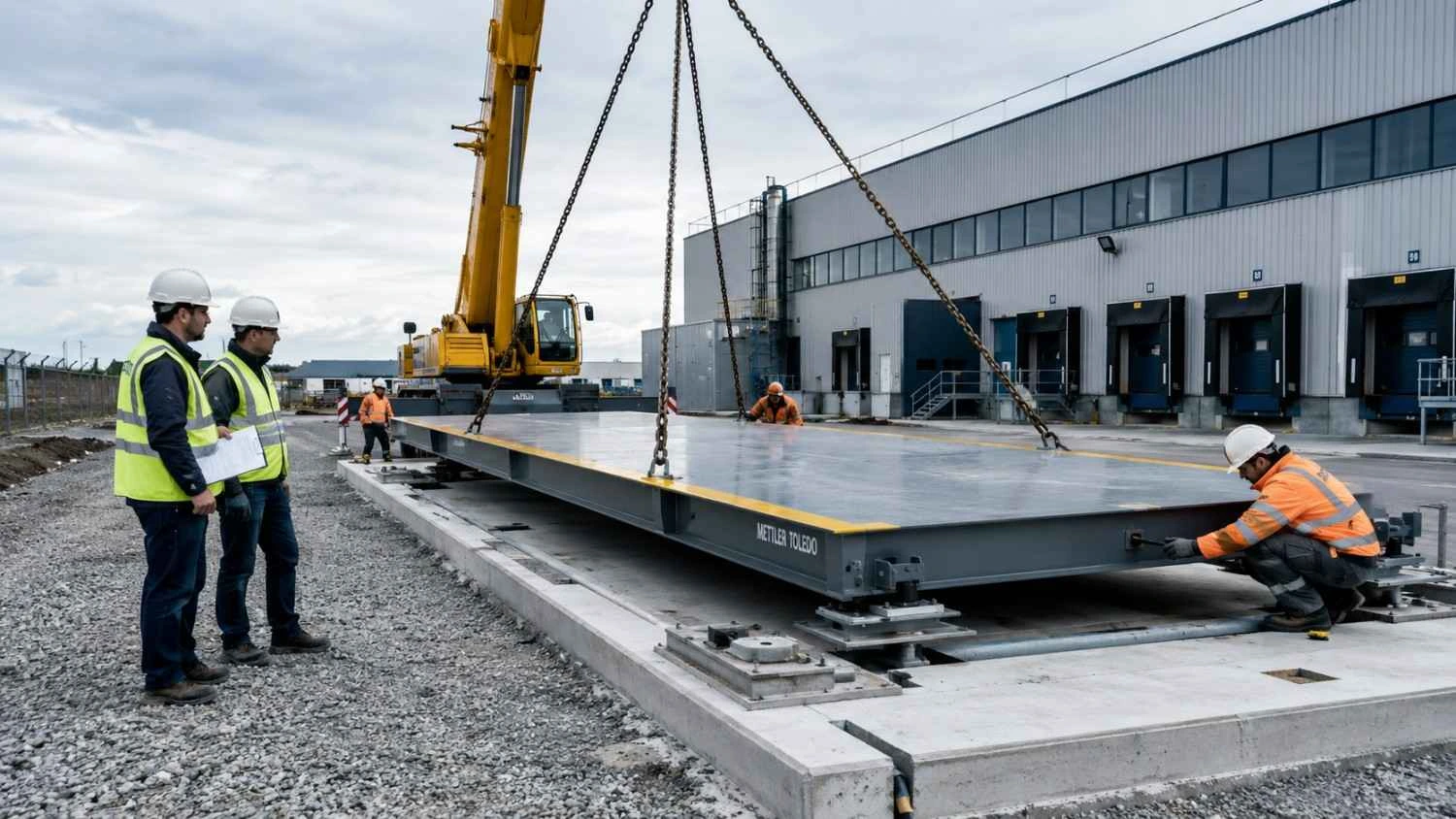
Truck weighbridges are essential tools for industries that handle bulk materials, heavy transportation, and large-scale logistics operations. Whether in construction, mining, agriculture, manufacturing, waste management, or logistics, weighbridges help businesses accurately measure vehicle loads, maintain compliance with transportation regulations, and improve operational efficiency.
However, the performance and accuracy of a weighbridge depend heavily on proper installation. Even the most advanced weighing equipment can deliver inaccurate results if it is not installed correctly. A well-planned installation process ensures long-term reliability, minimizes maintenance costs, and maximizes return on investment.
This comprehensive guide explains the complete truck weighbridge installation process, from site assessment and foundation preparation to calibration and maintenance, helping businesses understand what is involved in setting up a professional weighing system.
What Is a Truck Weighbridge?
A truck weighbridge is a large industrial scale designed to measure the weight of trucks and other heavy vehicles. It consists of a platform supported by load cells that convert the force exerted by the vehicle into electrical signals, which are then processed and displayed as weight readings.
Truck weighbridges are commonly used to:
- Measure incoming and outgoing materials
- Prevent vehicle overloading
- Manage inventory accurately
- Improve logistics operations
- Ensure legal compliance
- Generate billing and transaction records
The accuracy and durability of a weighbridge largely depend on how well it is installed.
Why Proper Weighbridge Installation Matters
A weighbridge is a significant investment for any organization. Improper installation can lead to numerous problems, including:
- Inaccurate weight readings
- Frequent calibration issues
- Structural damage
- Increased maintenance costs
- Operational downtime
- Regulatory non-compliance
Proper installation ensures:
- Maximum weighing accuracy
- Long equipment lifespan
- Reliable performance
- Reduced maintenance requirements
- Improved operational efficiency
This is why professional planning and execution are critical during the installation process.
Types of Truck Weighbridges Before Installation
Before beginning installation, businesses must determine the most suitable weighbridge type.
Pit-Mounted Weighbridge
A pit-mounted weighbridge is installed flush with the ground surface.
Advantages
- Requires less surrounding space
- Easy vehicle access
- Suitable for congested industrial sites
Best Applications
- Manufacturing facilities
- Urban logistics centers
- Industrial plants
Pitless Weighbridge
A pitless weighbridge is installed above ground with access ramps.
Advantages
- Lower construction cost
- Easier maintenance
- Better drainage
Best Applications
- Construction sites
- Mining operations
- Agricultural facilities
The installation process varies slightly depending on the selected weighbridge type.
Step 1: Site Assessment and Planning
The installation process begins with a detailed site assessment.
Key Evaluation Factors
Traffic Flow
Engineers evaluate:
- Vehicle movement patterns
- Entry and exit routes
- Turning radius requirements
- Traffic congestion risks
Ground Conditions
Soil analysis determines:
- Load-bearing capacity
- Stability
- Foundation requirements
Space Availability
Adequate space must be available for:
- Weighbridge platform
- Vehicle approach roads
- Maintenance access
- Equipment housing
Utility Requirements
The site should support:
- Electrical supply
- Network connectivity
- Drainage systems
Proper planning helps avoid costly modifications later.
Step 2: Selecting the Right Weighbridge Capacity
The next step is determining the required weighing capacity.
Common truck weighbridge capacities include:
| Capacity | Common Application |
| 40 Tons | Small industrial operations |
| 60 Tons | General transportation |
| 80 Tons | Construction projects |
| 100 Tons | Mining and heavy industry |
| 120 Tons+ | Specialized applications |
Selecting the correct capacity prevents equipment stress and ensures accurate measurements.
Step 3: Designing the Foundation
The foundation is one of the most critical elements of weighbridge installation.
A poorly constructed foundation can affect:
- Accuracy
- Stability
- Equipment lifespan
Foundation Design Considerations
Vehicle Load Distribution
The foundation must withstand repeated heavy vehicle traffic.
Soil Conditions
Different soil types require different engineering approaches.
Environmental Factors
Consider:
- Rainwater drainage
- Temperature variations
- Ground movement
Civil engineers prepare detailed structural drawings before construction begins.
Step 4: Excavation and Civil Construction
Once the foundation design is approved, civil construction begins.
Excavation
For pit-mounted systems:
- Ground excavation is performed according to design specifications.
- Drainage channels are incorporated.
For pitless systems:
- Surface preparation is completed.
- Ramp foundations are constructed.
Reinforcement Work
Steel reinforcement bars are installed to strengthen the concrete foundation.
Concrete Pouring
High-strength concrete is poured and cured according to engineering standards.
Proper curing is essential to achieve maximum structural strength.
Step 5: Installation of Foundation Bolts and Anchor Points
Anchor bolts are embedded within the foundation during construction.
These bolts:
- Secure the weighbridge structure
- Maintain platform alignment
- Prevent movement during operation
Precise positioning is critical because even minor alignment errors can affect weighing accuracy.
Step 6: Platform Assembly
After the foundation has fully cured, platform installation begins.
Structural Components
The weighbridge platform typically consists of:
- Steel modules
- Concrete deck sections
- Hybrid steel-concrete structures
Platform Positioning
The platform is carefully positioned using lifting equipment.
Engineers ensure:
- Perfect alignment
- Proper leveling
- Structural stability
At this stage, the physical weighing structure begins to take shape.
Step 7: Load Cell Installation
Load cells are the most important components in a weighbridge system.
They convert vehicle weight into electrical signals.
Types of Load Cells
Analog Load Cells
Traditional weighing technology.
Digital Load Cells
Offer:
- Higher accuracy
- Better diagnostics
- Improved reliability
Installation Procedure
Technicians:
- Position load cells beneath the platform
- Secure mounting assemblies
- Connect signal cables
Extreme care is taken to avoid damage during installation.
Step 8: Junction Box Installation
The junction box acts as the communication hub between load cells and the weighing indicator.
Its functions include:
- Signal balancing
- Load cell integration
- Data transmission
The junction box is installed in a protected location to minimize environmental exposure.
Step 9: Electrical Wiring and Communication Setup
Electrical installation connects all system components.
Wiring Includes
- Load cell cables
- Indicator connections
- Power supply wiring
- Network communication cables
Modern Connectivity Features
Many weighbridges now support:
- Ethernet communication
- Wi-Fi connectivity
- Cloud integration
- Remote monitoring
Proper cable management helps prevent future operational issues.
Step 10: Installation of Weighing Indicator
The weighing indicator serves as the system’s control center.
Key Functions
- Displays weight readings
- Stores transaction data
- Supports reporting
- Integrates with software platforms
Indicators are typically installed in:
- Control rooms
- Security cabins
- Operator offices
The location should provide visibility and protection from environmental conditions.
Step 11: Software Integration
Modern weighbridge systems rely heavily on software.
Software Features
- Vehicle tracking
- Data storage
- Inventory management
- Reporting
- ERP integration
- Automated ticket generation
Software installation ensures that weighing data becomes actionable business intelligence.
Step 12: Calibration Process
Calibration is one of the most important installation stages.
Purpose of Calibration
Calibration ensures:
- Accurate measurements
- Regulatory compliance
- Reliable performance
Calibration Procedure
Certified test weights are placed on the weighbridge platform.
Technicians verify:
- Load cell response
- Weight accuracy
- Signal consistency
Adjustments are made until the system meets required accuracy standards.
Step 13: Testing and Commissioning
Before operational use, the weighbridge undergoes comprehensive testing.
Functional Testing
Checks include:
- Weight measurement accuracy
- Software functionality
- Communication systems
- Indicator performance
Vehicle Testing
Actual trucks are weighed to verify system performance under real-world conditions.
Final Inspection
Engineers inspect:
- Structural integrity
- Safety features
- Electrical systems
- Operational readiness
Once approved, the weighbridge is commissioned for use.
Safety Measures During Installation
Safety remains a top priority throughout the installation process.
Essential Safety Practices
- Use certified lifting equipment
- Wear protective gear
- Follow electrical safety procedures
- Secure construction zones
- Conduct risk assessments
A safe installation reduces project delays and prevents workplace incidents.
Common Installation Challenges
Poor Soil Conditions
Problem
Weak soil may not support heavy loads.
Solution
Ground stabilization and reinforced foundations.
Water Accumulation
Problem
Standing water can damage equipment.
Solution
Proper drainage design.
Incorrect Alignment
Problem
Misaligned platforms affect weighing accuracy.
Solution
Precision surveying during installation.
Electrical Interference
Problem
Signal disruptions impact measurement reliability.
Solution
Shielded cables and proper grounding.
Post-Installation Maintenance Recommendations
Regular maintenance preserves weighbridge performance.
Daily Tasks
- Remove debris
- Inspect platform condition
Monthly Tasks
- Check load cells
- Inspect cables
Quarterly Tasks
- Verify calibration
- Review software performance
Annual Service
Professional inspections should include:
- Structural assessment
- Electrical testing
- Full calibration
Preventive maintenance significantly extends system lifespan.
Benefits of a Professionally Installed Weighbridge
Organizations that invest in professional installation enjoy several advantages.
Improved Accuracy
Reliable weight measurements reduce errors.
Greater Efficiency
Faster vehicle processing improves productivity.
Reduced Costs
Accurate weighing minimizes product losses.
Regulatory Compliance
Helps avoid legal penalties and fines.
Enhanced Data Management
Provides valuable operational insights.
Long-Term Reliability
Proper installation reduces breakdowns and maintenance expenses.
Emerging Trends in Weighbridge Installation
Technology continues to transform industrial weighing systems.
Automation
Automated vehicle identification reduces manual intervention.
RFID Integration
Vehicles can be recognized automatically during weighing.
Cloud-Based Reporting
Data becomes accessible from anywhere.
AI-Powered Analytics
Artificial intelligence helps identify operational trends and inefficiencies.
Smart Industrial Ecosystems
Modern weighbridges are increasingly integrated into broader logistics and supply chain networks.
Many businesses are also adopting advanced Vehicle Weighing Systems Saudi Arabia to improve operational efficiency, enhance compliance, and support digital transformation initiatives.
Conclusion
The installation of a truck weighbridge is a complex but highly valuable process that requires careful planning, professional engineering, and precise execution. From site assessment and foundation design to load cell installation, calibration, and software integration, every stage plays a critical role in ensuring accurate and reliable weighing performance.
A properly installed weighbridge not only delivers accurate weight measurements but also improves operational efficiency, reduces costs, enhances safety, and supports regulatory compliance. As industries continue to modernize and embrace automation, investing in a high-quality weighbridge system and professional installation services will remain essential for long-term business success. Whether you operate in logistics, mining, construction, manufacturing, agriculture, or waste management, understanding the weighbridge installation process is the first step toward building a more efficient and data-driven operation.